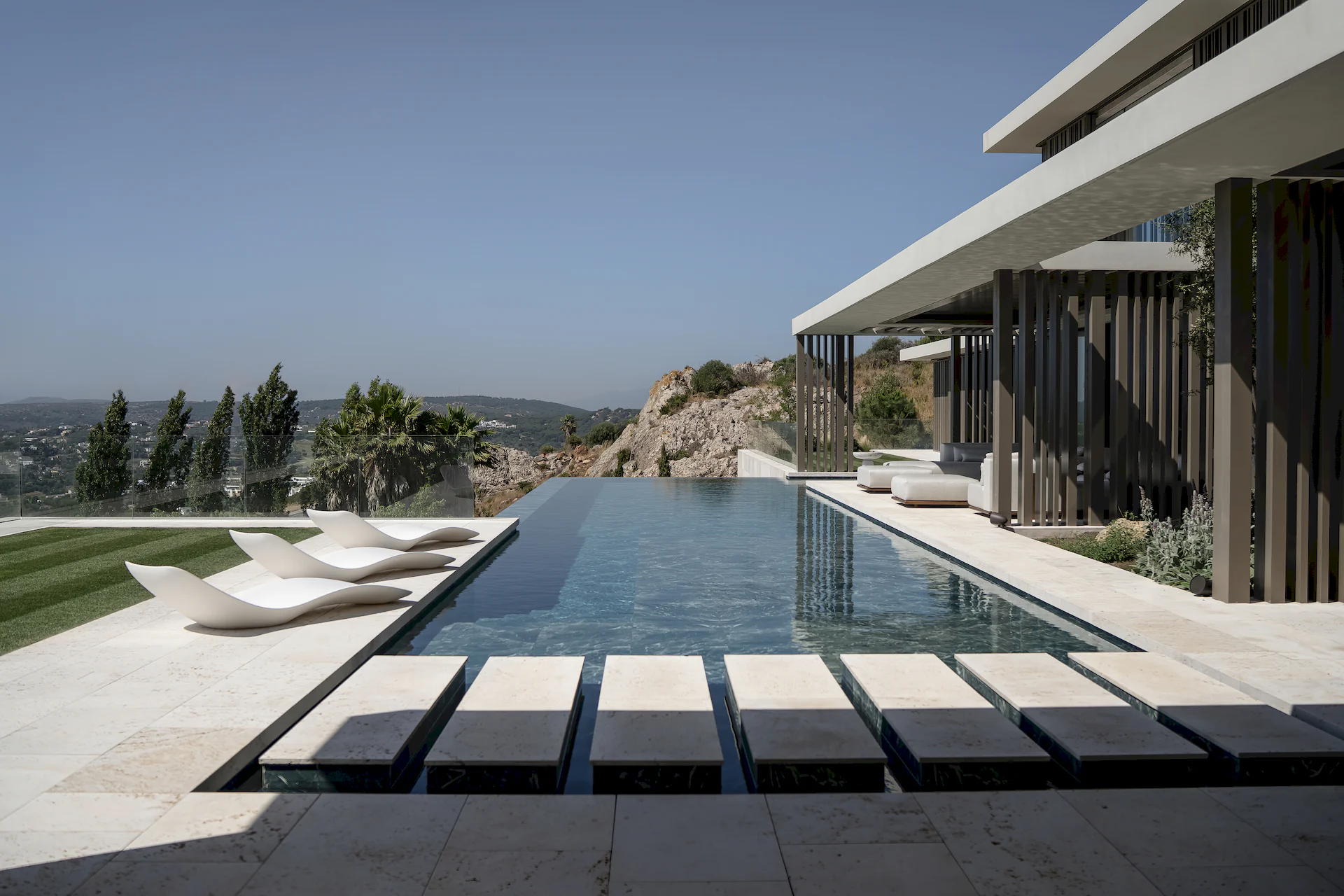
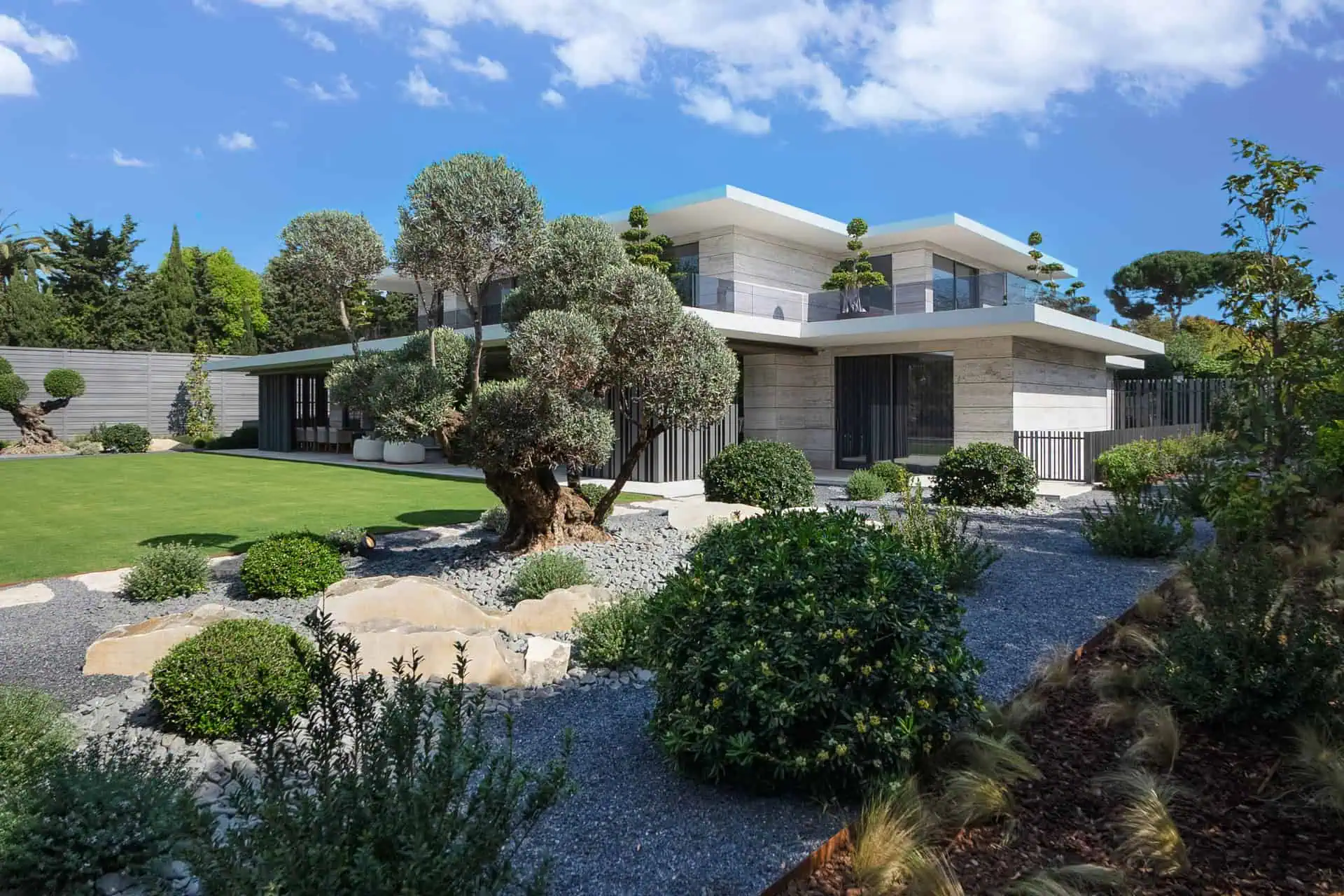
The garden is a place between worlds. It is not just nature, nor merely architecture. It is an intermediate space, crafted with sensitivity, where vegetation, minerals, light, and water find a balance that does not happen by chance. It happens because it is thought through, drawn, imagined. It happens because someone decides how that place should feel.
In our approach to architecture, the garden is not an accessory or a final addition. Often, it is the starting point. There are projects in which the first stroke is not a façade, or a volume, or even a floor plan. It is a line of shadow, a sheet of water, the placement of a tree, the path of light throughout the day. From there—from that construction of emptiness and time—the house begins to emerge.
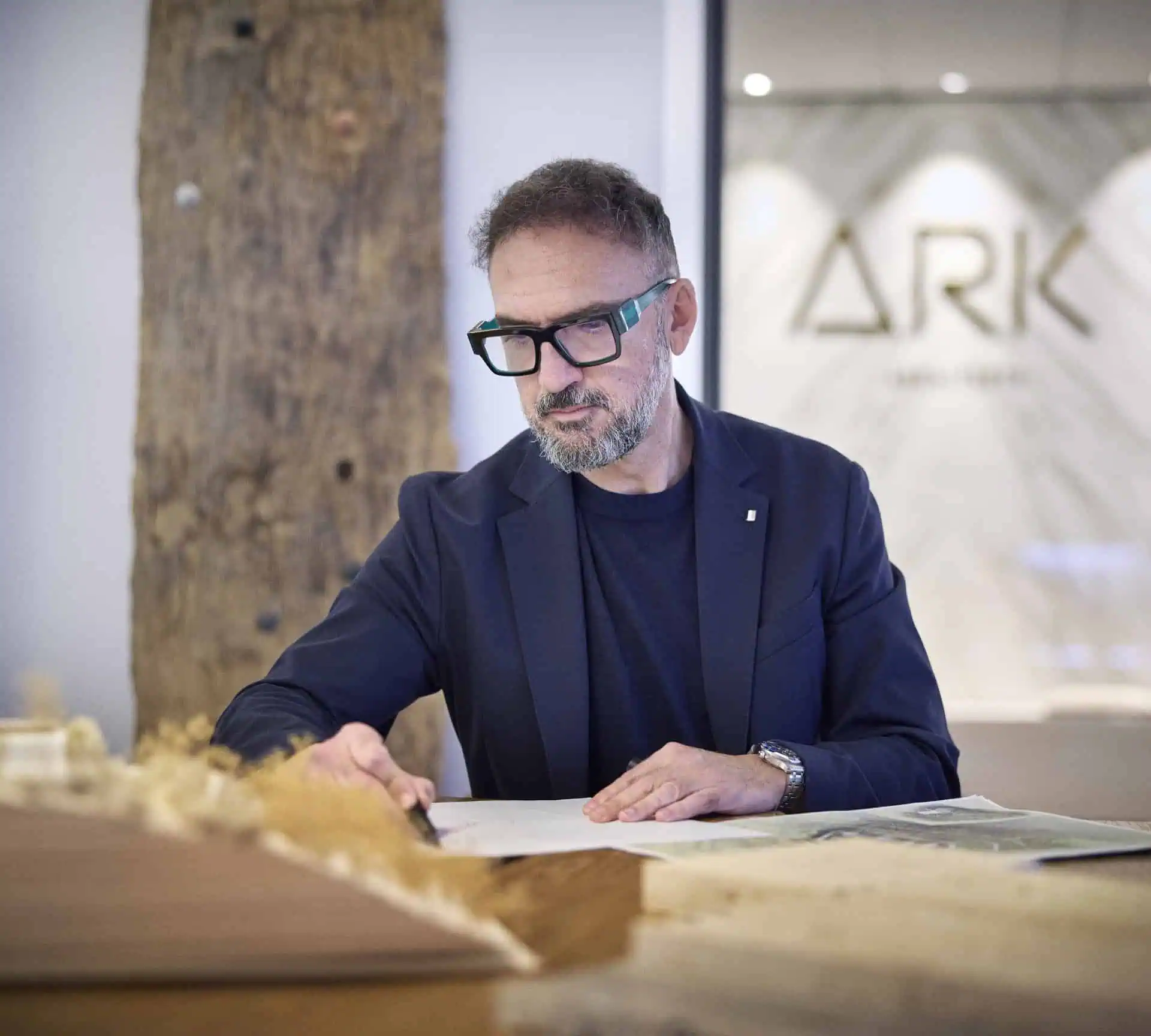
Manuel Ruiz Moriche, creative director and co-founder of ARK Architects, calls it “the mediating element between the environment and the architecture.” The garden is that threshold, that transitional capsule between the natural and the built. It is not a green backdrop, but a structuring space. Another language. A gesture that connects landscape and life.
Manuel approaches it from his own discipline: “I don’t design gardens like a gardener—I design them like an architect,” he says. And from that standpoint, he shapes them with the tools he knows: geometry, scale, proportion. The vegetation is arranged, but not dominated. It is contained, but not confined. That is, perhaps, the essence of the garden as we understand it: a domesticated nature that breathes architecture.
Our gardens are boxes of light. Spaces where light doesn’t merely enter—it constructs. It filters through branches, vibrates on water, projects itself onto textured surfaces. It is the light that gives life to the garden, that gives it character, that transforms it throughout the day and the seasons. That’s why we need to give it geometry, structure, architectural interpretation. It’s the way we think: to draw the garden with the same intention and precision used to design a home.
At ARK, we feel deeply connected to our Mediterranean cultural heritage. Designing gardens is also a way of remembering where we come from. From the Hanging Gardens of Babylon to the Greek, Roman, and Andalusian courtyards, there is a legacy that we don’t copy—but we feel. That memory is expressed in our projects through the patio, the central axis, the play of water, the void constructed as a space for contemplation. These are ancestral resources that we reinterpret using a language that is our own: contemporary and honest.

The garden doesn’t just organize a project. It anchors it. It connects it to the place. It is a powerful tool for communicating with the landscape without using words, for respecting our surroundings without giving up the identity of the design. Sometimes, the garden is even the true origin of the project. As Manuel explains, there are homes that are born from the garden: that outdoor space appears first, that clearing in nature—and then the house arranges itself around it.
Ultimately, we design architecture to create beauty. A beauty that is not superficial, not made to impress. A silent, calm beauty that has to do with light, with human scale, with the balance between material and atmosphere. The garden is one of our most powerful ways to achieve that beauty.
As architect Luis Barragán once said, “I like to design houses that look like gardens and gardens that look like houses.” That phrase, as simple as it is profound, perfectly sums up an aspiration we fully share: to experience architecture from the serenity of the garden. To inhabit what is built as if it were part of the landscape. To feel both inside and outside at once.
We design for people, and for the place. For the garden, too. Because when those three elements intertwine coherently, something more than a house is born. An experience emerges. A way of inhabiting the world.