The value of a place goes beyond what can be measured
The true value of a place cannot be explained solely through land prices, buildability, square metres or immediate returns. It also depends on qualities that are harder to quantify —landscape, beauty, silence, identity, privacy and quality of life— and on the way those qualities allow a place to remain desirable over time.
This was one of the central ideas explored at “El valor de lo que perdura” (“The Value of What Endures”), held on 17 September at SO/ Sotogrande Spa & Golf Resort Hotel as part of “Habitar el Futuro: Naturaleza, Valor y Comunidad” (“Inhabiting the Future: Nature, Value and Community”), a conference series promoted by Sotogrande S.A. and FAEC. Manuel Ruiz Moriche, co-founder and Creative Director of ARK Architects, brought an architectural perspective to a conversation spanning sustainability, urban planning, investment, tourism and territorial development.
Preservation does not always mean non-intervention
One of the questions at the heart of Ruiz Moriche’s contribution was deceptively simple: is the best way to preserve a place to leave it completely untouched?
The question moves the debate away from extremes. Not every area should be developed; some landscapes have an ecological value that requires them to remain intact. But human intervention is not necessarily destructive by definition. With a deep understanding of place, long-term planning and genuine sensitivity to the landscape, architecture can help organise, restore and enrich a territory.
The real challenge is knowing how to distinguish between these situations and responding with the level of rigour each context demands.
“Between doing nothing and overdeveloping, there is a middle ground where what we do can actually improve our territory.”
Building the intangible
Architects work with physical elements —stone, timber, concrete, glass, water and vegetation— but architecture does not end with materials. It also creates light, silence, privacy, wellbeing, emotion and a sense of belonging.
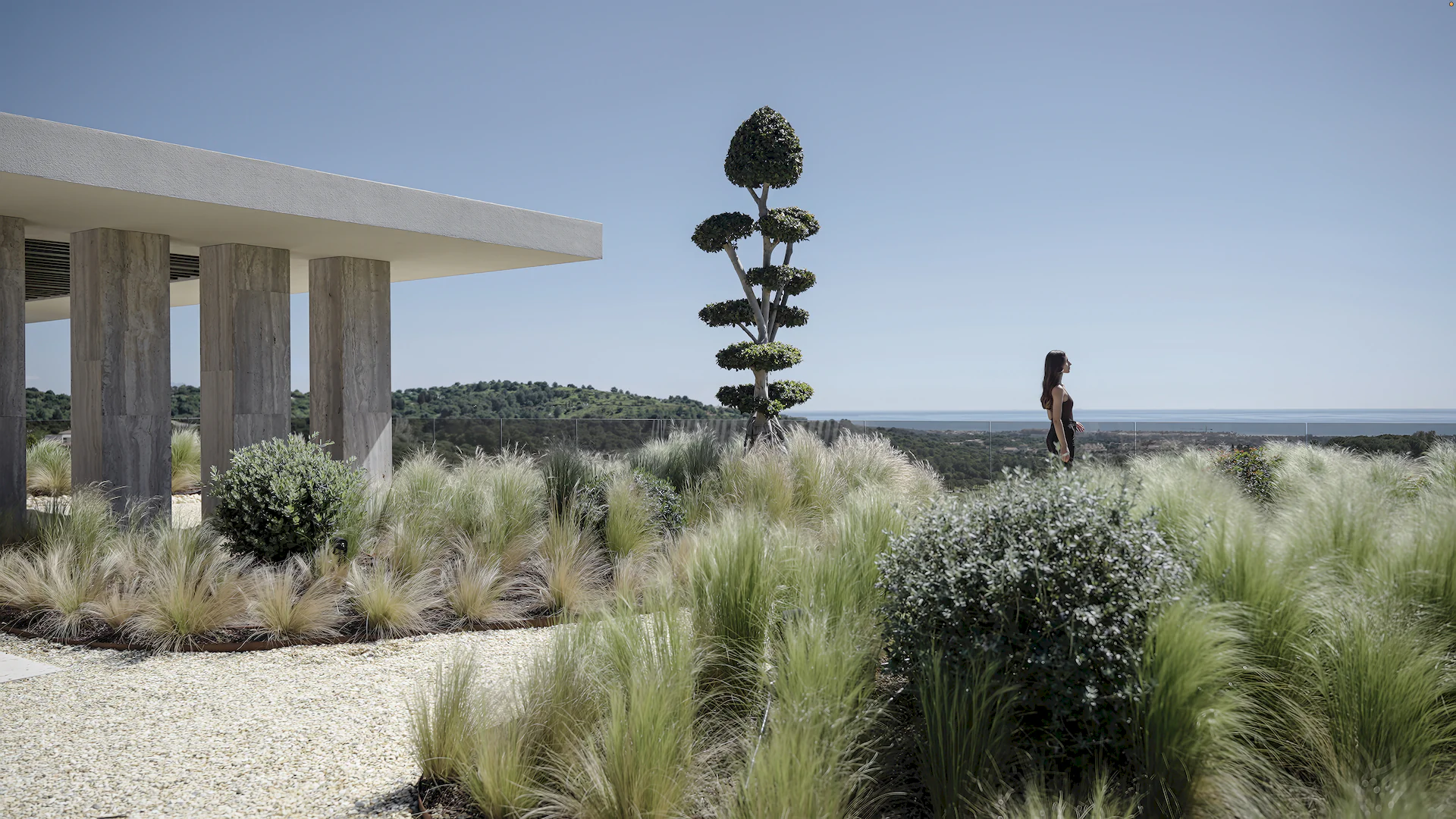
From this perspective, a home does not gain value only from its size, finishes or location. Its value emerges through the relationship it establishes with the people who live there and with the landscape around it. Orientation, topography, existing vegetation, views, the movement of the sun and each family’s way of life cease to be constraints and become the starting point of the project.
This way of thinking is central to ARK Architects: creating spaces that do not impose themselves on their surroundings, but grow from them.
Architecture designed for longevity
To think about what endures is to move beyond the logic of immediate impact. Architecture designed only to respond to a trend can quickly lose relevance. By contrast, a building that can enter into dialogue with its setting, age with dignity and adapt to the lives of its inhabitants can become more valuable over time.
The longevity of a building is not only a matter of structural durability. It is also about its ability to continue functioning, moving people and belonging to its place decades after it was created.
That requires decisions that do not always maximise the short-term outcome: preserving trees, reducing the footprint on a plot, respecting the natural line of the terrain, protecting a view or choosing materials that improve with age. What may initially look like a limitation can ultimately become a source of distinctive value.
Sotogrande: evolving without losing identity
Sotogrande provides a particularly clear setting for this discussion. Much of its international recognition comes not only from its homes, amenities and infrastructure, but from a combination of low density, vegetation, privacy, silence, landscape and an identity shaped over more than six decades.
The lesson is not to reproduce a particular aesthetic or copy an urban model elsewhere. What can be replicated is a way of thinking: understand the territory before intervening, plan with a long-term perspective and prevent the success of a destination from eroding the very qualities that made it desirable.
The future of the most sought-after places will depend, to a great extent, on their ability to evolve without losing what makes them recognisable.
From visible luxury to wellbeing
The conversation also opened up a broader understanding of contemporary luxury. Beyond display, scale or the accumulation of material elements, luxury can be understood as the quality of an experience: space, time, privacy, nature, light and silence.
It is a quieter, more enduring form of luxury, expressed through proportion, materiality, craftsmanship and a natural relationship between indoor and outdoor spaces. A luxury that does not need to dominate the landscape, but instead allows people to contemplate it and live more fully within it.
“The true luxury of the 21st century is the kind that creates value without degrading what makes a place valuable.”
Creating value without consuming the territory
The round table brought together different perspectives on a shared question: how can economic development, sustainability and landscape protection stop being treated as opposing objectives?
From an architectural point of view, the answer lies in building better. The goal is not simply to reduce the impact of an intervention, but to understand a place deeply enough for architecture to contribute positively to its evolution. That means recognising that some territories should remain untouched, while also acknowledging that a sensitive, carefully planned and rigorously executed intervention can create cultural, social, environmental and economic value.
Ultimately, the challenge is not only to decide how much we want to grow, but what kind of value we want to create, for how long, and at what cost. This was the reflection Manuel Ruiz Moriche brought to “The Value of What Endures”, and it connects directly with ARK Architects’ vision: to create architecture that can endure, move people and generate value without consuming what makes a place valuable in the first place.